
The Story Behind Aspirin Business Solutions

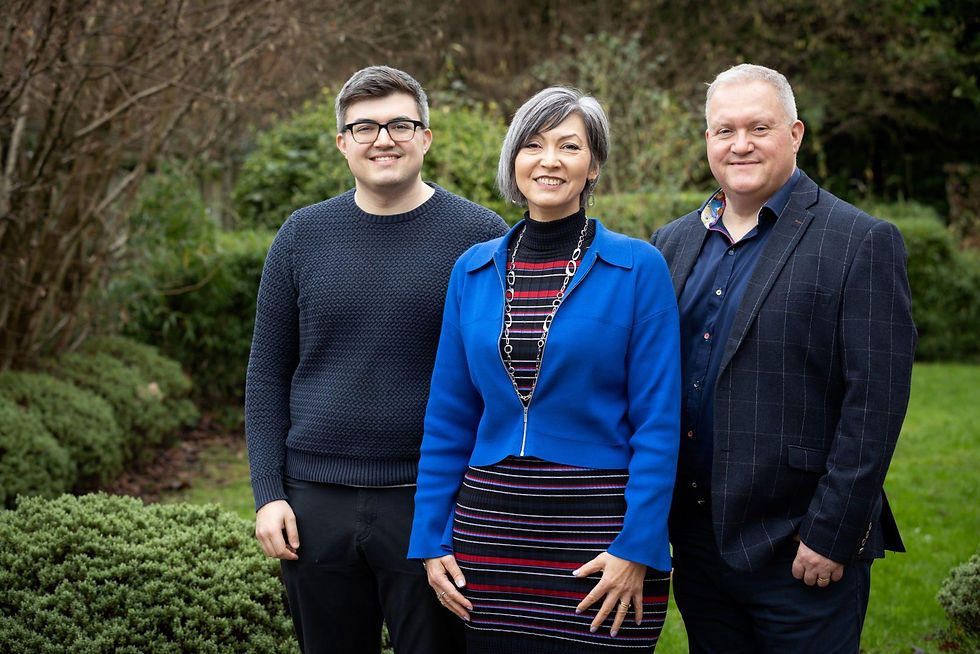
People often ask where the name Aspirin Business Solutions came from.
It came from the headaches.
Not the physical kind, although there were probably a few of those too. I mean the business headaches that come with leading people, growing a company, managing change and trying to do the right thing when you do not always feel as though you know what you are doing.
Before founding Aspirin Business Solutions, I helped grow a technology business from start-up to more than £10 million turnover and through a successful Management Buyout. During that time, I held Director roles across HR, Finance and Commercial. I helped build the HR and financial systems, gained the Investors in People accreditation, managed three ISO standards, supported leadership development, and worked on succession planning as part of the eventual exit strategy.

It sounds impressive when written down like that. The truth is, much of it felt like learning in the deep end.
I cared deeply about the business. I cared deeply about the people. I wanted us to do well, grow well, and treat people well along the way. But I was also carrying questions I did not always know how to answer.
Were my team enjoying their work? Were they likely to stay? Was I helping them, or getting in their way? How could I have better conversations about performance, motivation, and development? What if I asked what was demotivating them, but did not have the resources to fix it? Would I make things worse?
Like many leaders, I was often trying to work it out as I went along. I felt the pressure to look confident, even when I was unsure. Looking back, I can see now that some of that was imposter syndrome. I was pretending I knew what I was doing while quietly wondering whether everyone else had been given a manual I had missed.
I now know I was not alone.
Many leaders are promoted because they are good at their job. They are technically strong, loyal, committed, and willing to take responsibility. Then suddenly they are expected to lead, manage, develop, motivate, challenge, support, coach, delegate, and have difficult conversations. Often, they are expected to do all of this without enough leadership and management development.
No wonder there are headaches.

What those headaches taught me
Over time, I learned something important. Most people and performance headaches are preventable.
They rarely start as people problems. More often, they are caused by a lack of leadership and management development, unclear expectations, weak communication, low ownership, poor delegation, unmet motivational needs, or leaders carrying too much themselves.
That distinction is important because, if we think people are the problem, we tend to blame, avoid, or over-manage. We might label someone as difficult, disengaged, or not good enough, without really understanding what is happening underneath.
But when we look at the pattern behind the problem, something changes. We can start to diagnose what is really going on. We can treat the right issue rather than just the visible symptom. And we can prevent the same headache from coming back.

That is the thinking behind Aspirin Business Solutions.
We help ambitious, big-hearted leaders solve the people and performance headaches that make organisations harder to lead than they need to be. Our work includes leadership and management development, Motivational Maps, Liberating Leadership, team development, coaching, and succession planning support.
Those are the methods. The real aim is simpler:
👉 Motivated People. Confident Leaders. Fewer Headaches.
Why learning from each other matters

One of our mottos is:
Why should we all have the same headache when we can learn from each other instead?
That came from experience too. Looking back, I can see how many leadership lessons I learned the hard way. Some of those lessons were useful. Some were painful. Some took far longer than they needed to.
I do not believe every leader should have to repeat the same struggle in isolation. This is why we create practical, supportive learning experiences where people can be honest, learn together, and apply what they discover straight away.
Leadership development should not feel like theory for theory’s sake. It should help real people have better conversations, make better decisions, and build stronger teams. It should give managers confidence. It should help senior leaders stop carrying everything themselves. It should help organisations create cultures where people feel both supported and challenged.
That phrase, high challenge and high support, sits at the heart of our Liberating Leadership work. Strong leadership is not about being harsh. It is not about being soft either. It is about setting clear expectations while giving people the support, tools, and belief they need to succeed.
Most leaders I meet want to lead well. They care about their people and they care about results. What they often need is the language, confidence, and practical tools to make good leadership feel possible in the middle of real work, real pressure, and real people.
Why motivation became central to our work

A major turning point for me was discovering Motivational Maps.
At the time, I had used personality profiles and other development tools. They were useful, but they did not answer the questions I most needed answered as a leader. I did not just want to know what someone’s personality type was. I wanted to understand what motivated them, what gave them energy, what drained them, what they needed from their role, their manager and their working environment, and what might be changing beneath the surface.
One of the things I found hardest as a business leader was not performance itself. It was uncertainty. When we were growing the business, I cared deeply about the team. I wanted people to enjoy their work, feel valued, feel stretched in the right way and want to stay. Most of the time, things looked OK. People were busy, clients were being looked after, the business was moving and the team were doing good work. But I still carried the quiet question of whether they were genuinely happy, engaged and motivated, or whether they were starting to wonder if somewhere else might give them more of what they needed.
I worried about good people becoming flat, frustrated or tempted to leave. I worried about recruiters contacting the A-players in my team. I worried about asking what was demotivating them and not knowing what to do with the answer. I cared, I was committed and I was paying attention, but there is a difference between caring about your team and having clear insight into what is really driving them. Looking back, I was not missing commitment. I was missing data.
Motivational Maps gave me language, data and insight for conversations that many leaders find difficult to start. It helped me understand motivation not as a vague feeling, but as something that can be measured, understood and developed. That is one of the reasons motivation remains central to our work today. Guessing is exhausting, and it is risky. When leaders understand what motivates people, they can have better conversations before the resignation letter lands, before performance drops and before trust quietly erodes.


That is why motivation remains central to our work today.
Through Motivated Performance, our Motivational Maps division, we help HR leaders, coaches, consultants, and trainers understand, measure, and develop motivation. We also train and accredit practitioners to use Motivational Maps with their clients and teams.
Motivation affects so much of the employee journey: recruitment, onboarding, development, promotion, succession planning, performance, retention, conflict, and change. When leaders understand motivation, conversations become clearer. Decisions become better informed. People feel better understood.
Quite often, what looked like an attitude problem turns out to be something solvable - with the right tool.
Why being a family business matters to us
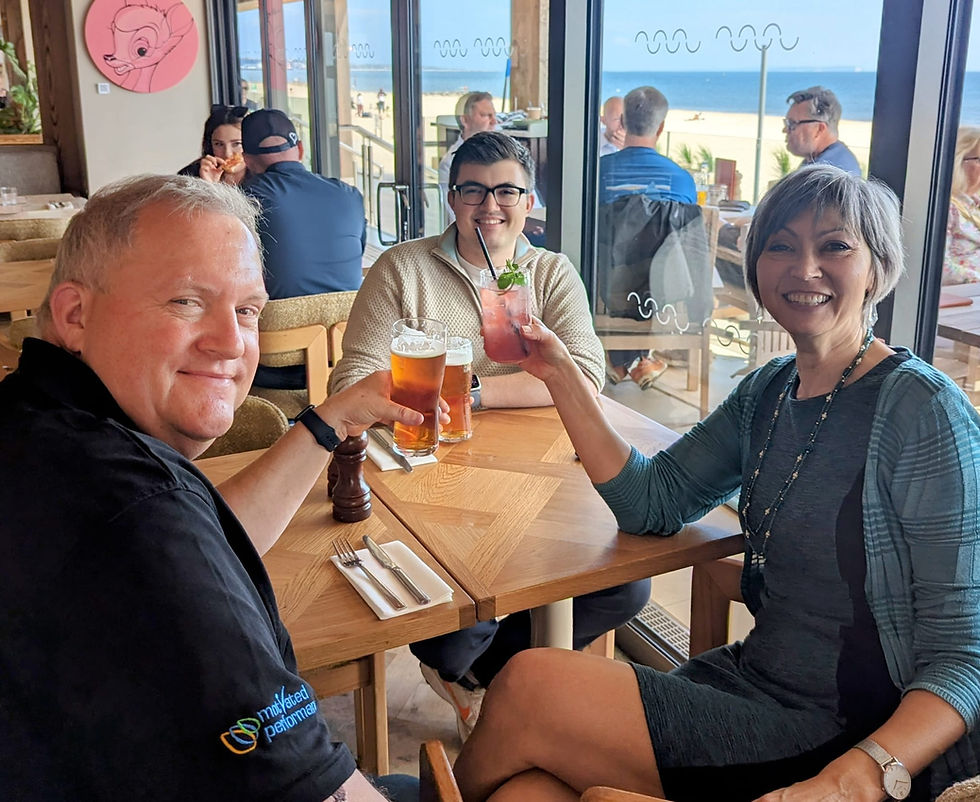
Aspirin Business Solutions is now a multi-award-winning family business, and that matters to us.
Not because being a family business is always easy. It is not. But because it means our values are not just words on a wall. They show up in how we work, how we support clients, and how we look after each other.
Our values spell TRUST:
Transformational
Respectful
United
Service-orientated
Trust.

Each of us brings those values to life in a different way.
I am the People Development Specialist. My focus is leadership, motivation, psychology, strategy, and helping people grow in confidence and capability.
Heath is our Relationship Builder and Director & Head of Happy. He has nearly 30 years’ experience in customer relationships, key account management, and business development. He is often the first person people meet and the one they continue speaking to long after a workshop, programme, or accreditation has finished.
Clients and practitioners often describe Heath as someone who makes them feel truly looked after. He loves building relationships locally and internationally, welcoming overseas visitors, sharing food, going for bike rides, and being the person who is there when someone needs support. People sometimes joke that Heath is always available. That may not be entirely true, but he does believe in being responsive, reliable, and easy to reach. If someone needs help, he wants them to know there is somebody in their corner.
Kyle, our son and now co-owner, is our Digital Overlord. His role has grown far beyond “doing the tech”. Kyle leads digital innovation across the business and is helping shape our strategy.
A powerful example is Scout, the platform he has created and developed to combine my 16 years of Motivational Maps experience with AI, user-friendly design, and practical reporting. Scout is not technology for technology’s sake. It is about making motivation insight easier to access, easier to understand, and easier to use.
In many ways, this reflects the next stage of our family business: psychology, relationships, and technology working together to help more people make better decisions.
What we help organisations with today
Our clients include solicitors, social and supported housing providers, charities, NGOs, financial services organisations, HR leaders, and growing businesses preparing for succession, leadership transition, or strategic growth.
They often come to us when they are experiencing familiar headaches. Managers are avoiding difficult conversations. People are waiting to be told what to do. Good employees are becoming flat or disengaged. Delegation is not working. Team friction is slowing progress. Leaders are carrying too much. Future leaders are not ready quickly enough. Succession planning feels unclear. Growth is creating pressure faster than leadership capability is developing.
These are common problems, but common does not mean inevitable.
With the right diagnosis, tools, and support, leaders can build teams that take more ownership, communicate better, feel more motivated, and perform more consistently. It does not mean leadership becomes effortless. Leadership will always involve challenge.
But it should not feel like a constant headache.
Start here
So, if you are new to Aspirin Business Solutions, this is the best place to start.
We exist because we know what business headaches feel like. We know what it is like to care deeply, work hard, feel responsible, and still wonder whether you are doing enough.
We also know the difference the right development, support, and insight can make.
That is why we do what we do. We help leaders learn faster, avoid common mistakes, and build stronger organisations through practical leadership development, motivation insight, better conversations, and supportive relationships.
Because why should we all have the same headache when we can learn from each other instead?
Motivated People. Confident Leaders. Fewer Headaches.
If any of this feels familiar, the best place to start is a conversation.


Comments